Virginia Beach Emergency Roof Leak Repair: What to Do Before the Roofer Arrives
Need emergency roof leak repair in Virginia Beach? Learn how to protect your home, limit interior damage, and prepare for a roofer visit.

A roof leak rarely happens at a convenient time. It usually starts during heavy rain, after strong wind, or in the middle of a storm when homeowners are already dealing with stress and uncertainty. Water starts dripping from the ceiling, a stain spreads across drywall, or moisture suddenly appears around a window, vent, or upper wall. In that moment, most homeowners in Virginia Beach are asking the same question: what should I do right now before the roofing contractor gets here?
The answer matters. The steps you take in the first hour can help limit interior damage, protect your belongings, and make the repair process easier once a professional arrives. Just as important, the wrong response can make things worse. Climbing onto a wet roof during a storm, ignoring attic moisture, or waiting too long to move furniture and electronics can lead to added risk and higher repair costs.
That is why understanding Virginia Beach emergency roof leak repair starts with preparation and practical action. Homeowners do not need to diagnose the entire roofing problem on their own. They do need to know how to respond safely, how to reduce immediate damage inside the home, and how to give the roofer clear information about what happened. In a coastal area like Virginia Beach, where roofs are exposed to heavy rain, wind-driven water, humidity, and storm conditions, a quick and organized response makes a real difference.
If your home develops a leak before a roofer can arrive, the goal is simple: protect people first, reduce water damage second, and leave the actual roof repair to a qualified professional. That approach helps you stay safe while giving your roofing contractor the best chance to solve the issue efficiently.
Start With Safety Before Anything Else
When water begins coming into the house, it is natural to focus immediately on the leak itself. But the first priority should always be safety. Water and electricity are a dangerous combination, and active leaks can also affect ceilings, insulation, and flooring in ways that create additional hazards.
If the leak is near a light fixture, ceiling fan, outlet, or any electrical device, use extreme caution. If it is safe to do so, turn off power to the affected area. If you are unsure whether the area is safe, avoid touching anything electrical until a qualified professional can assess it. Also pay attention to ceiling bulges. Water pooling above drywall can create a heavy load, and a sagging ceiling may eventually give way.
Another important safety point is this: do not climb onto the roof during rain, wind, or wet conditions. Homeowners sometimes feel pressure to “just check quickly,” but emergency roof leak situations are exactly when falls are most likely. Wet shingles, unstable flashing, storm debris, and hidden weak spots can all turn a quick look into a serious accident. Emergency roofing work should be handled by trained professionals with the right equipment.
Contain the Water Inside the Home
Once you have confirmed the area is safe enough to approach, your next step is to contain the water. This part is often simple, but it matters a great deal. Even a small drip can stain ceilings, warp floors, damage trim, ruin furniture, and affect electronics if left unchecked.
Place buckets, pots, storage bins, or other containers under the active drip. If the leak is splashing, put a towel inside the container to reduce splatter. Move rugs, chairs, artwork, lamps, electronics, and any valuables out of the affected area. If large furniture cannot be moved, cover it with plastic sheeting or waterproof tarps.
If the leak is coming through a ceiling and the drywall has started to bulge, the water may be pooling above it instead of dripping cleanly through. In some cases, homeowners choose to carefully puncture the lowest point of the bulge with a small tool so the water drains into a bucket in a controlled way. This can prevent a larger ceiling collapse. That said, it should only be done if the area is clear of electrical risk and you are confident the ceiling is the problem. If you are unsure, it is safer to keep the area clear and wait for professional guidance.
These interior steps will not solve the roofing problem, but they can greatly reduce the amount of damage that continues while you wait for emergency roof leak service.
Check the Attic if You Can Do So Safely
If your home has attic access and it is safe to enter, the attic can provide helpful information while also giving you the chance to contain water before it spreads farther. Bring a flashlight, step carefully, and avoid walking on insulation between joists. You are not trying to perform a repair. You are looking for signs of active moisture and the path the water may be taking through the roof system.
In the attic, look for:
- Wet insulation
- Water dripping from the underside of the roof deck
- Moisture trails along rafters or framing
- Dark staining on wood surfaces
- Daylight showing through where it should not
Sometimes the water entering the attic does not drip straight down into the room below. It may travel along wood framing before appearing several feet away from the true entry point. That is one reason roof leaks can be misleading. Still, the attic inspection can help you understand how active the leak is and whether more containers, towels, or plastic are needed to protect insulation or stored belongings.
If the attic is too dark, too cramped, or feels unsafe, do not force it. A roofing contractor performing Virginia Beach emergency roof leak repair will know how to inspect these conditions properly.
Use Temporary Interior Protection, Not Risky Exterior Fixes
When a leak is active, many homeowners understandably want to stop it immediately. The important thing is to focus on safe temporary protection, not dangerous improvised roof work. Interior containment is usually the right move until a roofer can inspect the damage safely from outside.
Helpful temporary steps may include:
- Placing plastic sheeting over furniture and flooring
- Using towels to absorb water around containers
- Moving items away from affected walls or ceilings
- Reducing moisture buildup with fans once the rain stops
- Documenting the leak and damage with photos
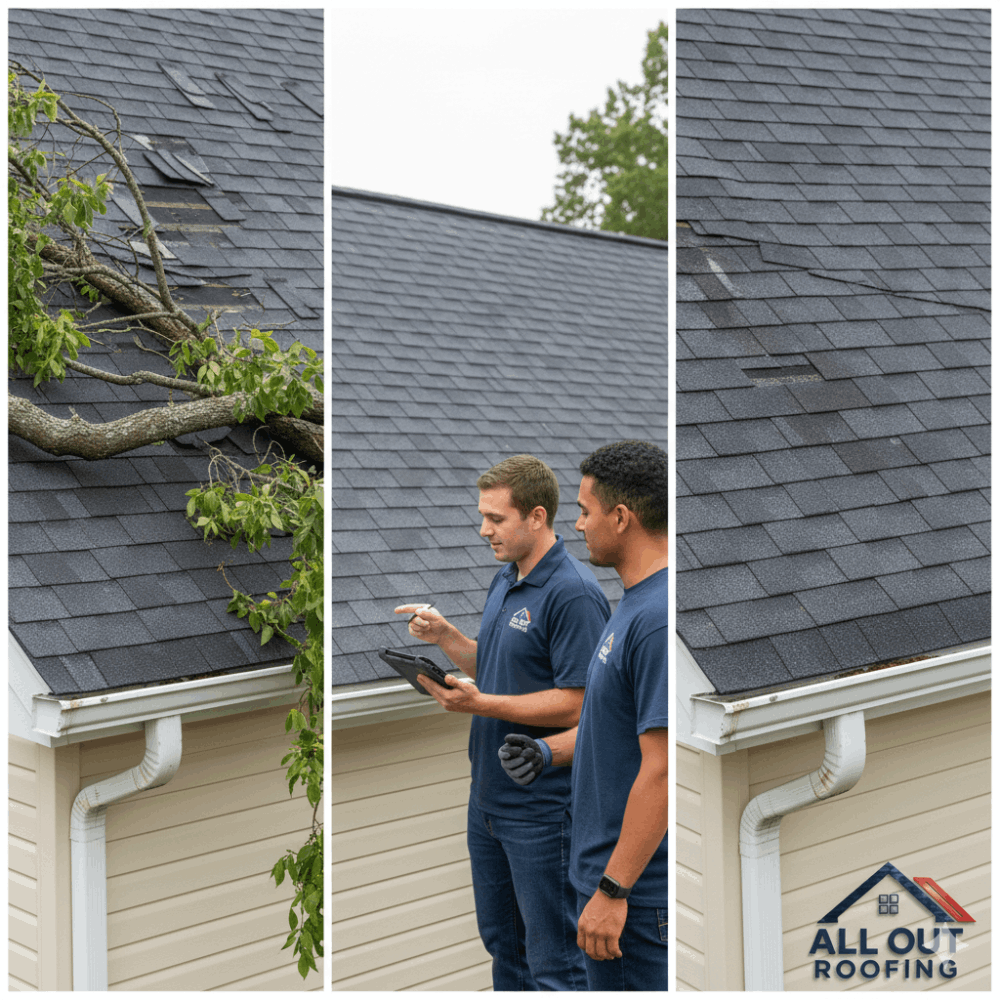
What you should generally avoid is trying to nail down a tarp in the rain, apply roof cement to a wet surface, or walk the roof looking for a hole. Even if the source seems obvious, the real weak point may be different from what is visible from the ground. Wind-driven rain can enter around flashing, vents, ridge areas, or damaged shingles and then travel before becoming visible inside.
An experienced roofer can decide whether emergency tarping, flashing repair, shingle replacement, or a broader roofing repair is needed. Your role is to protect the inside of the home and stay safe until that professional assessment takes place.
Know What Often Causes Emergency Roof Leaks in Virginia Beach
Not every emergency leak comes from the same type of roofing failure. In Virginia Beach, local weather patterns and coastal exposure create a few common causes. Strong wind can lift or tear shingles. Heavy rain can exploit aging flashing around chimneys, vents, and wall transitions. Debris can strike the roof and damage materials directly. Humidity and repeated weather exposure can weaken older roofing systems until one storm becomes the tipping point.
Common causes of emergency roof leaks include:
- Missing or wind-damaged shingles
- Cracked or displaced flashing
- Storm debris impact
- Compromised roof valleys
- Leaks around vent pipes or roof penetrations
- Aging roofing materials that no longer shed water properly
You do not need to identify the exact cause before calling a roofer, but understanding these possibilities helps explain why leaks should be taken seriously. Even if the water appears minor indoors, the damage at the roofline may be more significant than expected.
Call a Roofing Contractor as Soon as the Problem Is Clear
Once you have contained the leak and protected the interior as best you can, the next step is to call a trusted local roofing contractor. In an emergency, time matters. Water intrusion rarely improves on its own, and waiting can allow more moisture to enter insulation, decking, framing, and drywall.
When you call, be ready to explain:
- When the leak started
- Whether it is actively dripping or has slowed
- Which part of the home is affected
- Whether the leak followed a storm or high winds
- Whether you noticed missing shingles, debris impact, or ceiling bulges
This information helps the roofing company understand the urgency and prepare for the likely type of inspection or temporary mitigation needed. In some cases, the first visit may focus on stopping active water intrusion and securing the roof. Permanent repairs may follow once conditions are dry and the full extent of the damage can be assessed.
For homeowners in a coastal market, choosing a contractor familiar with Virginia Beach weather conditions is valuable. Local experience matters when dealing with storm-related leaks, coastal wear, and the types of roofing stress that homes near the ocean often face.
Document the Damage Before Cleanup Goes Too Far
It is smart to take clear photos and notes before you fully clean up the affected area. This helps create a record of what happened and may be useful for repair planning or insurance-related questions. Photograph the ceiling stains, the active drip area, any damaged belongings, attic moisture if visible, and any exterior signs you can safely capture from the ground.
Documentation also helps the roofer. A leak may slow or temporarily stop by the time the contractor arrives, especially if the rain passes. Photos of the active conditions can provide helpful context when diagnosing where water was entering and how severe the intrusion was at its worst.
Try to note whether the leak started during wind-driven rain, steady rain, or after a specific storm event. Timing matters. Some leaks only appear when wind pushes water in a certain direction, while others show up during longer periods of rain because water is backing up through a vulnerable area.
What Not to Do While Waiting for the Roofer
Just as important as knowing what to do is knowing what to avoid. Emergency leak situations can create panic, and panic often leads to risky decisions. Homeowners should resist the urge to treat an active leak like a do-it-yourself roofing project.
Avoid these common mistakes:
- Do not get on a wet or storm-damaged roof
- Do not assume the visible interior drip marks the true roof entry point
- Do not ignore small leaks because they seem manageable
- Do not run electrical devices in wet areas without caution
- Do not wait days to seek roof repair after storm-related leaking
Even a small leak can signal a larger roof problem. In Virginia Beach, where roofs face rain, humidity, wind, and salt-air exposure, small breaches can worsen quickly if left unresolved.
How to Prepare for the Roofer’s Visit
Once your emergency roofing appointment is scheduled, a little preparation can help the visit go more smoothly. Clear the area inside where the leak is visible so the contractor can inspect ceilings, attic access points, and any affected rooms without obstacles. If you know where attic access is located, make sure it is easy to reach. Keep any photos you took available on your phone so you can show the roofer what conditions looked like at their worst.
If possible, also make sure the contractor has access to the driveway, side yard, or other exterior areas needed to inspect the roof. Move vehicles if necessary. If branches or storm debris are present on the ground, point them out. These details may help the roofer connect exterior damage with the interior signs you noticed.
The more clearly you can explain what you saw, the easier it becomes to diagnose whether the problem involves shingles, flashing, a roof penetration, drainage issue, or broader storm damage.
Why Fast Action Helps Limit Long-Term Damage
Emergency roof leaks are not only about the water you can see. They are also about the moisture you cannot see yet. Water entering through a damaged roofing system can affect insulation, wood decking, framing, ceiling materials, and paint long before the full damage becomes obvious. That is why acting quickly is so important.
In Virginia Beach, that urgency is even greater because coastal humidity can make trapped moisture harder to dry out. A leak that seems minor during a storm can continue affecting hidden areas after the rain stops. What begins as a small entry point in the roof covering may spread into attic insulation, seep along rafters, or stain drywall several feet away from the original source. That is why homeowners should treat fast response as a way to reduce the overall scope of damage, not just as a way to stop an inconvenient drip.
Hidden Moisture Can Keep Spreading After the Storm
One of the biggest challenges with a leaking roof is that water rarely stays in one place. It may enter through lifted shingles, damaged flashing, or a vulnerable roof penetration, then travel along structural components before it becomes visible indoors. A local roofing contractor or emergency roof repair specialist understands that the visible stain is often only part of the story.
- Wet insulation can lose effectiveness and hold moisture longer
- Roof decking can begin to weaken when water intrusion continues
- Ceilings and wall finishes may stain, bubble, or deteriorate
- Wood framing can remain damp even when surfaces look dry
That chain reaction is why delaying service can turn a focused roof repair into a broader restoration issue.
Quick Response Protects More Than the Roof Covering
Calling a roof service company promptly helps protect the entire home envelope. The goal is not only to repair shingles or flashing, but also to prevent moisture from reaching the areas below. A qualified roofing company, storm damage contractor, or exterior repair team can determine whether the home needs temporary protective measures first, followed by permanent repairs once the system is fully assessed.
Fast action is especially helpful when a leak follows strong wind or driving rain. Those conditions often point to damage that may worsen with the next weather event. Addressing the problem early gives homeowners a better chance to limit interior repair costs and avoid repeat water intrusion.
Why Waiting Often Costs More
Homeowners sometimes wait because the leak appears to have slowed or stopped. The risk is that the roofing system may still be compromised. Once the next storm arrives, water may re-enter through the same opening and cause more extensive damage. A prompt inspection from a trusted roof repair professional gives homeowners a clearer picture of what was affected and what needs to happen next before the issue grows into something much larger.
A prompt response helps reduce the chance of:
- Widespread drywall and ceiling damage
- Insulation becoming saturated
- Wood rot in roof decking or framing
- Musty odors and mold-related concerns
- More expensive restoration work later
In a humid coastal climate, delays carry extra risk. Moisture does not always dry out harmlessly. Once it enters enclosed spaces, it can continue affecting materials after the rain has stopped.
Emergency Roof Leak Repair Is About Control, Not Panic
When a leak appears unexpectedly, homeowners often feel they have to solve the whole problem immediately. In reality, the best response is more controlled than dramatic. Stay safe. Contain the water. Protect the interior. Document the damage. Call a trusted local roofing contractor. Those steps put the situation in the best possible position until professional repairs can begin.
For homeowners dealing with Virginia Beach emergency roof leak repair, the key is not guessing your way through a roofing failure. It is taking practical action that limits damage while leaving the actual repair to a qualified professional who understands how coastal roofs perform under stress. In many cases, that calm first response is what prevents a frustrating leak from turning into a much larger home repair problem.
If your Virginia Beach home is dealing with a sudden roof leak, the safest move is to protect the interior right away and contact an experienced local roofing company for prompt inspection and repair. Quick action now can help preserve your home, reduce avoidable damage, and get the roofing system back to doing its job as soon as possible.