How to Spot Early Roof Damage on Homes in Newport News
Learn how to spot early roof damage on homes in Newport News before leaks and structural issues become harder and more expensive to fix.

Most major roof problems do not begin as major roof problems. They begin quietly. A shingle lifts a little after a windy afternoon. A small line of flashing starts separating near a chimney. A few granules collect in the gutter. A faint water stain shows up in the attic and then seems to dry out. Because the roof still looks mostly fine from the yard, the issue is easy to ignore. That is exactly why homeowners benefit from learning how to recognize early roof damage on homes in Newport News before leaks spread, repair costs rise, and hidden structural issues become harder to manage.
In Newport News, roofs deal with a demanding mix of weather conditions. Heavy rain, humidity, summer heat, strong winds, and seasonal storms all put steady pressure on roofing systems. A roof does not need to lose large sections of shingles to start failing. In many cases, the earliest damage is subtle. It may not show up dramatically until the next storm finds the weak point and pushes water where it does not belong. By then, what could have been a smaller repair may involve underlayment, decking, insulation, drywall, or interior painting as well.
That is why a practical, prevention-focused mindset matters so much. Homeowners do not need to climb on the roof or become roofing experts. They simply need to know what warning signs are worth taking seriously and when it is time to schedule a professional inspection. The earlier you catch roof trouble, the more options you usually have. That often means simpler repairs, less interior damage, and a stronger chance of extending the roof’s useful life.
For homeowners in Newport News and nearby Virginia Beach, learning what early roof damage looks like is one of the smartest ways to protect both the home and the budget. A roof rarely fails without leaving clues. The goal is to notice those clues while they are still manageable.
Why Early Roof Damage Is Easy to Miss
Roofs are easy to overlook because they sit above daily life. Most homeowners do not see them up close very often, and they should not be walking on them casually anyway. As a result, the first stages of roof damage often go unnoticed. A roof can be developing problems for weeks or months before the homeowner sees a ceiling stain or finds shingles in the yard.
Part of the issue is that roofing systems are layered. Water does not always come straight through the first time a weak point appears. A lifted shingle may hold for a while. A flashing gap may allow only a small amount of moisture during wind-driven rain. A ventilation problem may quietly shorten roof life without causing an obvious leak right away. Because the symptoms are gradual, homeowners often mistake them for minor issues or delay action until the damage becomes more obvious.
That is why spotting early roof damage on homes in Newport News depends on paying attention to small changes rather than waiting for a dramatic event. The first warning signs are often the most valuable because they give you the best chance to act before the repair becomes larger.
Start With What You Can See From the Ground
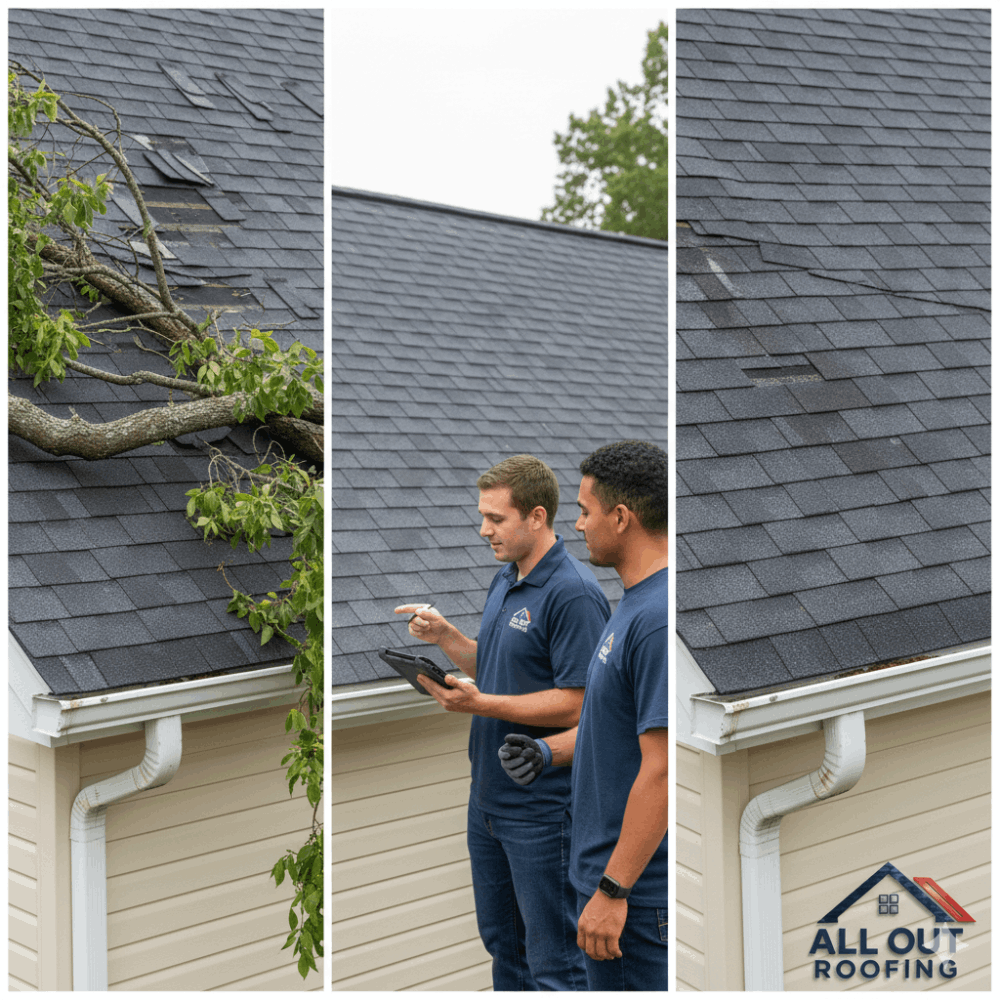
You do not need to get onto the roof to notice that something may be wrong. In fact, one of the safest and most practical habits a homeowner can develop is simply looking at the roof from the ground from time to time, especially after storms. Walk around the house and view the roof from different angles if possible. You are not trying to diagnose everything. You are looking for visible changes.
Common signs that deserve attention include:
- Shingles that look lifted, curled, or out of line
- Missing shingles or bare patches
- Sagging or uneven rooflines
- Flashing that appears loose around chimneys or vents
- Dark streaks, algae, or moss growth in certain areas
- Gutters that are bent, detached, or overflowing
These signs do not always mean the roof is in crisis, but they do mean the roof may be developing vulnerabilities. A roof in good condition tends to look even, stable, and consistent. Visible irregularities are worth investigating before weather makes them worse.
Look for Loose, Curling, or Missing Shingles
Shingles are often the first visible part of a roof to show early wear. They are directly exposed to wind, rain, sunlight, and temperature changes, so when a roof begins to weaken, shingles often reveal it. In Newport News, wind and storm exposure can loosen shingles without removing them completely. That makes the damage easy to miss from below if you are only looking for dramatic holes or missing sections.
Curling shingles are a common warning sign. When the edges or corners begin to lift, it usually means the shingle is aging, drying out, or losing flexibility. Cracked shingles are another concern because once the surface is broken, water can move into the roofing layers more easily. Missing shingles are more obvious, but even one or two missing sections can expose underlayment and create a path for leaks.
The important thing is not to think only in terms of catastrophe. A few shingles out of place can still become a significant issue if the next storm hits before repairs are made.
Pay Attention to Granules in the Gutters
Asphalt shingles are coated with protective granules that help them resist sunlight and weather exposure. Over time, some granule loss is normal, especially as the roof ages. But when granules begin collecting heavily in gutters or near downspouts, it can be one of the earliest signs that the roof is wearing down more noticeably.
Granules often look like coarse black or gray sand. Homeowners may see them when cleaning gutters or notice them washing out during heavy rain. On their own, a few granules are not necessarily alarming. But heavier buildup can mean the shingles are losing part of the protective layer that helps them perform well.
Granule loss matters because it often comes before larger visible failure. A roof may still look fairly normal from a distance while the shingles are becoming more brittle and vulnerable to cracking, curling, and storm damage. This is one of the quieter forms of early roof damage on homes in Newport News, but it is still important.
Do Not Ignore Flashing Problems
Many homeowners assume roof leaks start in the middle of the roof field, but very often they begin at transitions. Flashing is installed around chimneys, skylights, vents, valleys, and roof-to-wall connections to direct water away from openings. When flashing starts to loosen, rust, crack, or separate, water can enter even if the shingles still look acceptable.
Flashing problems are especially important because they often remain hidden until water shows up inside. From the ground, you may notice a loose edge, visible rust, or a section that looks out of place. Indoors, you may notice a leak near a chimney, upper wall corner, or around a ceiling vent area.
Small flashing issues rarely stay small. Because these areas handle concentrated water flow, even a narrow opening can lead to repeated moisture intrusion. This is why flashing deserves just as much attention as shingles during any inspection or visual check.
Check the Attic for Early Warning Signs
One of the best places to spot early roof damage is not outside at all. It is in the attic. If the attic is safely accessible, it can reveal moisture problems before they become obvious in the living space below. Homeowners should occasionally look for signs such as water stains on the underside of the roof decking, damp insulation, musty odors, or visible daylight where it should not be.
The attic can also reveal whether ventilation may be affecting the roof’s health. Trapped humidity and poor airflow can cause long-term wear even when no obvious leak is present. In a climate like Newport News, where humidity is a regular factor, attic moisture deserves serious attention.
Common attic clues include:
- Dark staining on wood decking
- Damp or compressed insulation
- A musty smell after rain
- Mold or mildew growth
- Excessive attic heat and poor airflow
These signs suggest that the roof may be taking on moisture or that ventilation problems are shortening the roof’s lifespan. Either way, the issue is worth a professional evaluation.
Watch for Ceiling Stains and Peeling Paint
Interior symptoms are often what finally get a homeowner’s attention, but even then the signs may still be in an early stage. A small brown stain on the ceiling, bubbling paint near the top of a wall, or faint discoloration near a corner can all point to a roof issue that has not yet become a major leak.
The challenge is that water does not always show up directly below the source of entry. It can travel along framing or across decking before becoming visible. That means a stain does not necessarily pinpoint the exact place where the roof is compromised. It does, however, tell you that moisture may already be getting in.
Homeowners should not dismiss a stain just because it seems minor or because it dries after the storm. Roof leaks often appear intermittently at first. A problem that only shows up during certain wind or rain conditions can still worsen quickly over time.
Notice Changes After Storms, Even Small Ones
Not every roof problem begins during a major named storm. Sometimes an ordinary stretch of heavy rain or a windy afternoon is enough to expose a weak point. That is why one of the best habits homeowners can develop is checking for changes after weather events, even if the storm did not seem severe.
After rain and wind, look around the property for signs such as:
- Shingle pieces or roofing debris in the yard
- Branches scraping or resting on the roof
- Loose or bent gutters
- New stains on ceilings or in the attic
- Any part of the roof that suddenly looks uneven
Storms do not always leave obvious damage, but they often leave clues. Catching those clues early can make the difference between a small repair and a more expensive repair after the next round of rain.
Be Alert to Sagging or Soft Areas
A roof should look stable and straight. If you begin noticing a dip, sag, or uneven section, that is a more serious sign that should never be ignored. Sagging may mean long-term moisture damage has affected decking or structural components beneath the surface. It can also suggest that water has been entering for longer than anyone realized.
This kind of issue is not always widespread, but it deserves prompt attention because it may involve more than surface materials alone. What begins as a slight low spot can eventually lead to larger structural repairs if left untreated. Any visible change in the roofline should be professionally evaluated rather than watched casually over time.
Understand the Role of Ventilation in Early Damage
Not all roof damage starts with weather from above. Sometimes it starts with conditions below the roof. Poor attic ventilation can trap heat and moisture, both of which can shorten the life of roofing materials. Homeowners may not think of ventilation as roof damage, but it often creates the conditions that lead to premature aging, moisture retention, and decking problems.
In Newport News, humidity makes ventilation even more important. If warm, damp air stays trapped in the attic, shingles may age faster and wood components may hold moisture longer than they should. Early signs can include uneven roof wear, overheated upstairs rooms, attic condensation, and musty smells.
This matters because a roof can look fine from the outside while still developing hidden problems due to poor airflow. A professional roofing inspection should consider ventilation as part of the bigger picture, not just the visible roof covering.
Why Small Problems Become Expensive Problems
Most homeowners do not ignore roof issues because they are careless. They ignore them because the issues seem small. And that is exactly what makes roofing so deceptive. Small roofing problems often become expensive because they create openings for moisture to spread into areas you cannot see. Once decking, insulation, drywall, or framing are involved, the repair becomes more than a roof repair.
A loose shingle can lead to wet underlayment. A flashing gap can lead to attic moisture. A clogged gutter can push water under the roof edge. A ventilation issue can accelerate wear across the whole system. The original symptom may have been minor, but the consequences are not.
This is why spotting early roof damage on homes in Newport News matters so much. The earlier you respond, the more likely it is that the repair stays limited to the true problem area rather than the damage that happened afterward.
When Homeowners Should Call a Professional
Homeowners do not need to wait for a major leak to schedule a roof inspection. In fact, the best time to call is often when something only seems questionable. If shingles look uneven, granules are building up, flashing appears loose, attic moisture is present, or new ceiling stains show up after rain, a professional inspection is a smart next step.
A roofing professional can determine whether the problem is isolated or part of broader wear. They can also tell the difference between cosmetic aging and damage that truly affects performance. That kind of clarity helps homeowners act with confidence instead of guessing or delaying.
It is especially wise to schedule an inspection after storms, when the roof is older, or when several small warning signs begin appearing at once. Roofing problems rarely improve on their own.
Final Thoughts on Early Roof Damage on Homes in Newport News
Learning how to recognize early roof damage on homes in Newport News gives homeowners an important advantage. It helps you catch loose shingles, flashing issues, granule loss, attic moisture, ceiling stains, drainage problems, and early structural warning signs before they grow into bigger and more expensive repairs. In a region where rain, wind, humidity, and seasonal storms are part of normal homeownership, that kind of awareness matters.
The goal is not to become overly worried about every imperfection. It is to understand that roofs usually signal trouble before they fail in a dramatic way. A slight change in appearance, a new stain, a loose gutter, or a musty attic smell may all be early warnings that deserve attention.
For homeowners in Newport News, Virginia Beach, and surrounding areas, the smartest roofing strategy is usually a simple one: notice small changes, act sooner rather than later, and get a professional opinion before a manageable issue becomes a disruptive one. When early damage is caught early, repairs are often more focused, less invasive, and more affordable. And that is exactly the kind of outcome every homeowner wants when it comes to protecting the roof over their head.