Top Signs You Need Roof Repair in Norfolk Before Damage Spreads
Learn the top signs you need roof repair in Norfolk, from ceiling stains to missing shingles and soft spots that worsen over time.

Most roofing problems do not begin with a dramatic event. They begin quietly. A small water stain appears near a ceiling corner after a storm. A few shingles show up in the yard after a windy afternoon. A section of the roofline starts to look slightly uneven, but only from one angle. Because the signs seem minor at first, many homeowners wait. That delay is exactly how a small roofing issue turns into a much larger and more expensive one. That is why it is so important to understand the top signs you may need roof repair in Norfolk before damage spreads further into the home.
In Norfolk, roofs deal with a steady mix of moisture, humidity, strong rain, wind, heat, and seasonal storms. Even when weather events are not severe enough to feel dramatic, they can still wear down weak spots over time. A roof that looks mostly fine from the street may still have failing flashing, cracked shingles, hidden moisture intrusion, or drainage issues that are getting worse with every storm. By the time the damage becomes obvious indoors, the roofing problem is often no longer limited to the exterior.
For homeowners in Norfolk and nearby Virginia Beach, early detection matters. Prompt roof repair protects much more than shingles. It protects decking, insulation, ceilings, framing, paint, and indoor comfort. The earlier a problem is caught, the more likely it is that the repair stays targeted and manageable. The longer it is ignored, the more likely it is to spread into multiple layers of the home.
The good news is that roofs usually give warning signs before major failure happens. Homeowners do not need to become roofing experts to notice them. They just need to know what to watch for and when it is time to call a professional.
Ceiling Stains That Appear After Rain
One of the clearest signs that you may need roof repair in Norfolk is a ceiling stain that appears after rain. These stains often show up as brown, yellow, or tan discoloration on the ceiling or upper portions of a wall. Sometimes they appear suddenly after a storm. Other times they seem faint at first and then slowly grow darker or larger after repeated weather events.
What makes ceiling stains especially important is that they usually mean water has already moved beyond the roof surface and into the home. That does not always mean the leak is directly above the stain. Water can travel along decking, framing, or insulation before it becomes visible indoors. But it does mean the roofing system has likely been compromised somewhere.
Many homeowners make the mistake of repainting a stain or waiting to see if it comes back. That is rarely the best move. A stain is not just a cosmetic problem. It is often the first interior sign that water has already found its way inside. The real source may be damaged flashing, missing shingles, a vent issue, or another weak point that deserves prompt inspection.
Missing or Loose Shingles
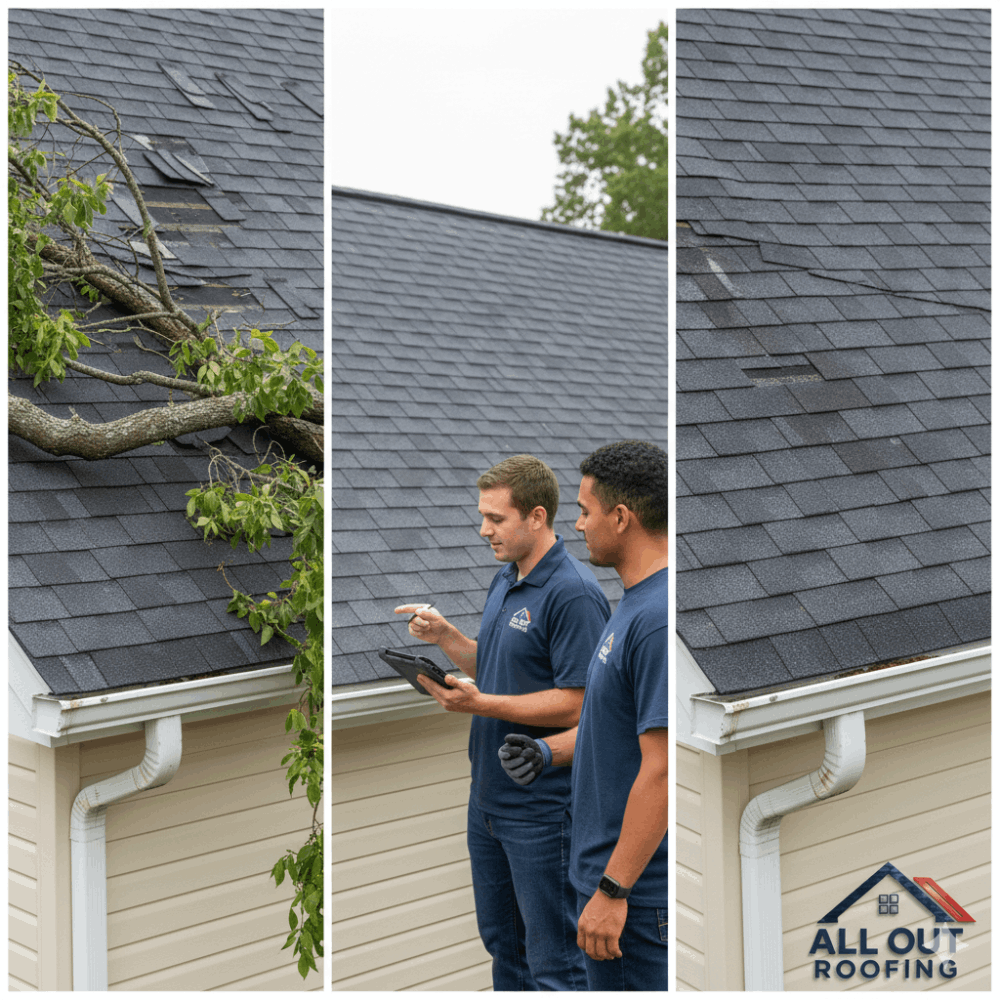
Shingles are designed to work together as a protective outer layer. When one or more go missing, the roof immediately becomes more vulnerable. Underlayment and decking beneath the exposed area can begin taking on direct weather exposure, and the surrounding shingles are often put under more wind stress as well.
In Norfolk, wind and coastal weather can loosen shingles even when the damage does not look dramatic from the ground. A few missing shingles after a storm may seem like a small issue, but that exposed area can quickly become a leak point during the next rainfall. The same is true for shingles that look lifted, cracked, curled, or out of alignment. Even if they have not blown away completely, they may no longer be protecting the roof as intended.
If you notice roofing debris in the yard or a patch on the roof that looks darker or uneven, it is worth taking seriously. Missing shingles often lead to bigger issues when homeowners assume the area is too small to matter.
Granules in the Gutters or Around Downspouts
Asphalt shingles are coated with protective granules that help them resist sun exposure and normal weathering. Over time, some granule loss is expected, especially as a roof ages. But when you start noticing heavier amounts of granules collecting in gutters or washing out through downspouts, that can be a sign the shingles are wearing down faster than they should.
Granules often look like coarse, dark sand. Homeowners may notice them during gutter cleaning or after heavy rain. On their own, they may not indicate an emergency. But they do suggest the roof may be entering a more vulnerable stage. As shingles lose granules, they often become more brittle, less protective, and more prone to cracking or premature aging.
This is one of the more subtle signs that roof repair in Norfolk may be needed soon, especially when granule loss appears alongside other issues such as curling shingles, storm damage, or recurring leaks.
Leaks Around Chimneys, Vents, or Skylights
Not all roof leaks start in the middle of the roof field. In fact, many begin around penetrations and transitions. Chimneys, skylights, plumbing vents, and roof-to-wall intersections all rely on flashing and seals to remain watertight. When those materials begin to fail, even slightly, water can enter around them.
Homeowners may notice signs such as staining near a fireplace, moisture around a skylight, or dripping that appears near a bathroom vent or ceiling fixture. These symptoms are often related to flashing failure, cracked sealants, or worn vent boots. They may not look dramatic from the outside, but they can become significant leak sources over time.
The reason these leaks deserve quick attention is that they rarely fix themselves. If flashing is loose or sealant has broken down, each new storm gives water another opportunity to enter. A targeted repair now is usually much simpler than repeated interior damage later.
Soft Spots or Sagging Areas
A roof should look stable, even, and structurally sound. If part of the roofline appears to sag, dip, or look uneven, that is a more serious sign that repair may already be overdue. Sagging areas can indicate prolonged moisture exposure, weakened decking, structural fatigue, or damage that has progressed beneath the visible roofing materials.
Soft spots are not always obvious from the yard, but they may become evident during an inspection or after ongoing leak issues. Homeowners may notice a roof plane that does not look straight, or they may see a section that seems to sit lower than the areas around it.
This is one of the signs that should never be ignored. While missing shingles or flashing failures can often be resolved with focused repairs, sagging may suggest deeper problems involving the decking or structure below. The earlier it is evaluated, the better the chance of limiting how much additional work is needed.
Recurring Water Problems in the Attic
The attic is one of the best places to spot early roofing issues before they become more visible in living spaces. If you have access to your attic, it is worth occasionally checking for moisture stains, damp insulation, musty odors, or darkened roof decking. These signs can indicate that the roof is allowing water in even before a ceiling stain appears downstairs.
Sometimes attic moisture is connected directly to a roof leak. Other times it is related to ventilation issues that allow damp conditions to build up beneath the roof. In either case, the roof system is under stress. Damp insulation loses efficiency, wood can begin to deteriorate, and mold or mildew may develop if the problem continues.
If the attic smells musty after rain or shows repeated signs of dampness, that is a strong sign that you should schedule professional roof repair in Norfolk or, at the very least, a thorough roof inspection.
Damaged or Overflowing Gutters
Gutters may not be the first thing homeowners think of when they think about roofing trouble, but they play an important role in preventing water intrusion. If gutters are sagging, detached, clogged, or overflowing, water may no longer be moving off the roof efficiently. Instead, it can back up under the roof edge, spill against fascia boards, or collect near vulnerable roofing details.
In Norfolk, where heavy rain can arrive quickly, drainage problems matter. Overflowing gutters during storms are not just a nuisance. They can be an early warning sign that your roof edge and drainage system are under stress.
Watch for:
- Water pouring over the sides of gutters
- Gutters that appear loose or sloped incorrectly
- Staining along fascia boards
- Debris packed into downspouts or valleys
When drainage is not working properly, the roof often becomes the next part of the home to feel the impact.
Curling, Cracking, or Blistering Shingles
Shingles should lie flat and look relatively consistent across the roof surface. When they begin curling at the edges, cracking across the tabs, or blistering from age and heat, they are often telling you the roof’s protective layer is weakening.
Curling shingles are common on older roofs or roofs that have been under stress from poor ventilation, long-term sun exposure, or weather wear. Cracked shingles are especially vulnerable during storms because water can work its way through those weakened surfaces. Blistering may indicate trapped moisture or material fatigue that reduces durability over time.
These are the types of visible warning signs homeowners often overlook because the roof may still look mostly intact overall. But once shingles start losing their shape or structure, the roof is no longer aging quietly. It is moving toward a stage where repairs become more important and delay becomes more costly.
Interior Peeling Paint or Bubbling Drywall
Water does not need to drip openly into a room to cause visible interior damage. Sometimes the first sign of a roof issue is peeling paint, bubbling drywall texture, or slight wall discoloration near the top of a room. These symptoms often mean moisture is getting into the structure in small amounts but consistently enough to affect the finishes.
Homeowners may assume the cause is indoor humidity or an isolated paint problem, but if it appears near the ceiling or on upper exterior-facing walls, the roof should be considered. This is especially true if the damage worsens after rain or seems connected to one part of the house.
These signs may still seem minor, but they are exactly the kind of clues that help homeowners catch roofing issues before they become much larger. What looks like a paint problem can actually be a roofing problem that has already been active for longer than expected.
Storm Debris or New Changes After Wind and Rain
Not every storm causes visible roof failure, but many storms cause enough change that a roof should be checked afterward. If you notice shingles, flashing fragments, or unusual debris in the yard after heavy wind, that is a sign to take a closer look. Even if the roof appears mostly intact from the ground, the storm may have loosened materials or damaged vulnerable areas that are not easy to see from below.
Likewise, if the roof suddenly looks uneven, a gutter seems bent, or an attic stain appears after a storm, those are all signs that repair may be needed sooner rather than later. Storm-related damage is one of the most common triggers for roof repair in Norfolk, and acting quickly often helps prevent the damage from spreading into interior materials.
This is why post-storm awareness is so valuable. The roof may not collapse dramatically, but it can still be compromised enough to need prompt attention.
Higher Energy Bills or a Hotter Upper Floor
Roofing problems do not always announce themselves as leaks. Sometimes they show up as comfort problems first. If upper rooms feel harder to keep cool, if the attic seems excessively hot, or if energy bills suddenly rise without another obvious explanation, it may be worth considering whether the roof or attic ventilation is part of the issue.
This does not mean every comfort issue is a roofing problem, but poor attic ventilation, aging shingles, or moisture-related deterioration can all affect how the home handles heat. In some cases, these symptoms appear before more obvious roof damage becomes visible.
When combined with any other warning sign on this list, changes in comfort and efficiency can be one more clue that the roof should be inspected.
Why Timing Matters
The biggest reason these signs matter is not that they automatically mean the roof is failing completely. It is that they show the roof may already be weakening in ways that get more expensive over time. A missing shingle today may be a simple repair. The same problem after two more storms may involve decking replacement, ceiling repair, and insulation work as well.
That is why roof problems should be handled while they still look manageable. Waiting usually gives wind, water, and humidity more time to work on the weak point. In Norfolk’s climate, that can happen faster than homeowners expect.
Prompt attention does not always mean replacement. Often it means a focused repair that protects the rest of the roof from further stress. But those focused repairs are easiest to make before the damage has spread.
Final Thoughts on Roof Repair in Norfolk
The top signs you may need roof repair in Norfolk often include ceiling stains, missing shingles, granules in gutters, flashing problems, attic moisture, damaged gutters, curling shingles, soft spots, and visible changes after storms. None of these issues should be brushed aside just because they seem small at first. In many cases, they are the earliest warnings that the roof needs attention before damage reaches deeper into the home.
For homeowners in Norfolk and Virginia Beach, the smartest approach is proactive. Notice the signs. Take them seriously. Schedule a professional inspection before the next storm makes the problem worse. Roof repairs are usually easier, more affordable, and more contained when handled early. The roof almost always gives some warning before major failure happens. The real advantage comes from responding while that warning is still small enough to manage.
When you catch roofing issues early, you do more than protect shingles. You protect the structure, comfort, and long-term value of your entire home. And in a region where weather can put roofs under regular pressure, that kind of early action is one of the most practical decisions a homeowner can make.