Most Common Roofing Problems Found on Homes in Chesapeake
Discover the most common roofing problems found on homes in Chesapeake, including leaks, damaged shingles, flashing issues, and ventilation concerns.

A roof usually does its job quietly. It sheds rain, handles wind, helps regulate temperature, and protects everything beneath it without asking for much attention. That is why many homeowners do not think about roofing issues until a stain appears on the ceiling, shingles show up in the yard, or a home inspection brings a hidden problem to light. In a coastal region like Chesapeake, that kind of delayed discovery is common. Roofing systems here face a steady mix of humidity, rain, wind exposure, seasonal storms, and heat, all of which can wear down materials over time. That is why understanding the common roofing problems on homes in Chesapeake can help homeowners act earlier, avoid larger repairs, and protect the value of their property.
Many roofing problems do not begin as emergencies. They start small. A lifted shingle, a rusted flashing edge, a blocked drainage path, or poor attic ventilation may seem minor at first. But when those issues are left alone, they can lead to leaks, wood damage, mold concerns, energy loss, and more expensive repairs later. The challenge is that roofing damage is not always visible from the ground. A roof can look mostly fine from the driveway while still developing weaknesses that deserve professional attention.
For homeowners in Chesapeake and nearby Virginia Beach, the best approach is usually prevention. When you know what problems are common, what warning signs to watch for, and how local weather conditions affect roofing systems, it becomes easier to schedule timely inspections and make informed decisions. Some roofs only need routine maintenance. Others may need targeted repairs. And in some cases, a roof that has multiple overlapping problems may be signaling that replacement is the more practical long-term solution.
This guide takes a closer look at the roofing problems contractors most often find on homes in Chesapeake, including leaks, damaged shingles, flashing failures, drainage issues, and ventilation concerns. These are not just technical issues. They are the problems that can shape how well a home holds up over time.
Why Roofing Problems Are So Common in Chesapeake
Chesapeake homes deal with environmental conditions that can be demanding on roofing materials. The region experiences moisture-heavy air, seasonal storms, strong rain events, temperature swings, and long periods of summer heat and humidity. Even if a home is not directly on the water, the broader coastal climate still affects how the roof ages.
These conditions create a pattern that many homeowners do not notice right away. Roof components expand and contract. Sealants dry out and crack. Shingles loosen from wind exposure. Flashing begins to deteriorate. Moisture lingers longer in shaded or poorly ventilated areas. Over time, these small stresses add up.
That is why the common roofing problems on homes in Chesapeake are often not caused by one dramatic event alone. They are usually the result of repeated weather exposure combined with age, deferred maintenance, or installation details that were never corrected properly.
Roof Leaks: The Problem Homeowners Notice First
Among all roofing concerns, leaks are usually the issue that gets a homeowner’s attention the fastest. Water stains on ceilings, damp drywall, peeling paint, and attic moisture all tend to create urgency. But a roof leak rarely begins at the moment it becomes visible inside the home. In many cases, the leak has already been developing for some time.
Leaks are common because a roof has many vulnerable transition points. Water may enter around flashing, vent penetrations, chimney bases, skylights, valleys, or damaged shingle sections. A small opening may let in only a little moisture at first, but that moisture can spread into decking, insulation, and framing before the homeowner sees obvious evidence indoors.
One of the most frustrating things about roof leaks is that the visible stain inside the house is not always directly below the source of the leak. Water can travel along structural elements before it appears, which is why professional diagnosis matters.
Signs of a likely roof leak include:
- Brown or yellow ceiling stains
- Damp attic insulation
- Musty smells after rain
- Peeling paint near upper walls or ceilings
- Visible moisture near vents, chimneys, or roof transitions
Leaks should never be treated as cosmetic problems. Even a small leak can lead to wood rot, mold growth, and more expensive repairs if it is allowed to continue.
Damaged or Missing Shingles
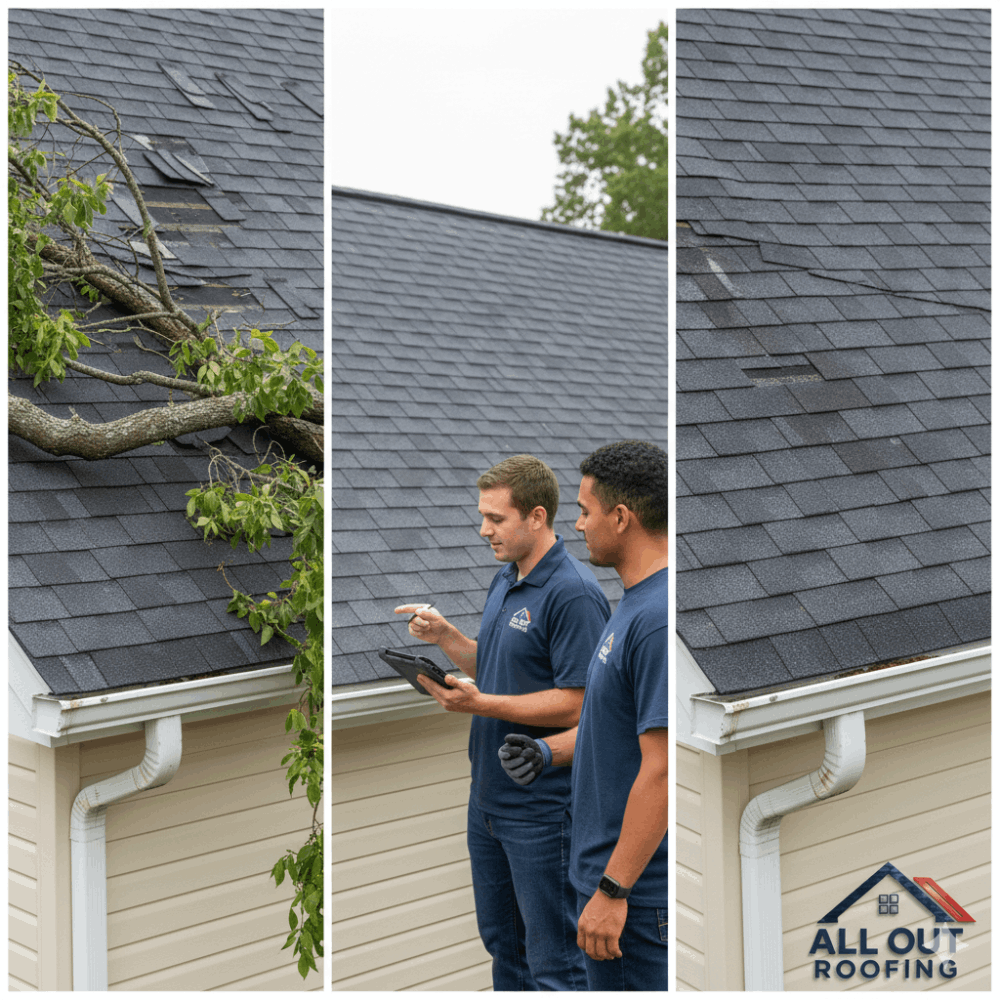
Shingle damage is another one of the most common issues found on Chesapeake homes. Asphalt shingles remain a popular roofing material because they are practical, attractive, and widely used. But they are also directly exposed to wind, rain, sunlight, and humidity year after year. Over time, that exposure creates wear.
Some shingle problems are easy to spot. Missing shingles, torn tabs, or scattered pieces in the yard are obvious signs that the roof needs attention. Other issues are subtler. Shingles may begin curling at the edges, cracking, blistering, or losing granules long before they completely fail.
Wind is often a factor. Once one shingle lifts or loosens, surrounding shingles can become more vulnerable as well. Water then has a better chance of reaching the underlayment or decking beneath. This is especially important after strong storms, even if the roof does not look severely damaged from the street.
Shingle issues matter because they can lead to:
- Exposed underlayment
- Higher risk of leaks
- Reduced wind resistance
- Faster aging across surrounding areas
- A noticeable drop in curb appeal
Sometimes damaged shingles can be repaired individually. In other cases, widespread deterioration suggests that the roof is reaching the end of its useful life.
Flashing Failures Around Roof Details
Flashing is one of the most important parts of any roofing system, and it is also one of the most commonly overlooked. Flashing is used to seal and protect roof transitions where water is more likely to enter, such as around chimneys, skylights, vent pipes, valleys, dormers, and where roofing meets vertical walls.
When flashing is damaged, rusted, loose, improperly sealed, or installed incorrectly, the roof becomes vulnerable even if the shingles themselves still look acceptable. In fact, many leaks start at flashing rather than in the middle of the roof field.
In Chesapeake, flashing failures are common because metal components and sealants are exposed to repeated moisture, temperature changes, and storm pressure. Older flashing may corrode. Sealants can crack. Movement in the roofing system may open small gaps that let in water.
Homeowners often do not notice flashing problems until a leak appears. That is one reason inspections matter. Flashing issues are often easier and less expensive to repair when they are found early rather than after water has already moved inside the home.
Poor Attic Ventilation
Ventilation problems are less obvious than missing shingles or active leaks, but they are extremely common and can quietly shorten the life of a roof. A roofing system is not just the material you see from outside. It also depends on what is happening beneath the surface, especially in the attic.
When an attic does not have proper airflow, heat and moisture can build up inside the home’s upper structure. In Chesapeake, where humidity is already high for much of the year, trapped attic moisture can create ongoing stress. Warm, damp air may contribute to mold growth, insulation problems, wood deterioration, and premature aging of roofing materials.
Poor ventilation can also affect energy efficiency. Homes with overheated attics often work harder to stay comfortable during warmer months. That does not just increase energy use. It also places extra strain on the roofing system from below.
Common signs of ventilation trouble include:
- Excess heat in the attic
- Musty odors
- Condensation or staining on roof decking
- Uneven roof aging
- Persistent indoor comfort issues at the top of the home
Ventilation is one of those roofing concerns that homeowners rarely think about until a contractor points it out, but correcting it can make a meaningful difference in roof performance.
Clogged Gutters and Drainage Problems
Water needs a clear path off the roof. When gutters, downspouts, and roof valleys become clogged with leaves, branches, granules, and debris, water can back up and begin working against the roof instead of flowing away from it. This is a very common issue on homes in Chesapeake, especially during heavy rain seasons and in neighborhoods with mature trees.
Clogged drainage systems may seem like a gutter problem more than a roofing problem, but the two are closely connected. Overflowing water can damage fascia boards, soffits, siding, and roof edges. Backed-up water can also work its way under shingles or collect in areas that are already vulnerable.
Drainage problems often contribute to premature wear in places homeowners do not check often, such as valleys and eaves. Over time, repeated overflow can weaken roof edges and increase the chance of leaks near the perimeter of the home.
Routine gutter cleaning and inspection are simple but valuable parts of roof maintenance. Keeping water moving properly helps protect much more than just the gutter system.
Storm Damage That Is Not Always Obvious
Chesapeake homes regularly experience wind-driven rain, seasonal storms, and occasional severe weather. After a major weather event, many homeowners look for obvious destruction and assume that no major visual damage means the roof is fine. Unfortunately, storm damage is not always that straightforward.
A roof may have loosened shingles, displaced flashing, bruised materials, or compromised seals without showing dramatic damage from the ground. Wind can weaken shingles without fully tearing them off. Debris impact can damage isolated areas that are hard to see. Water intrusion may begin at small openings caused by storm movement rather than direct tearing.
This is why post-storm inspections are so useful. Even when the roof appears intact, a professional can identify subtler issues before they become leaks or spread into broader deterioration. The sooner storm-related weaknesses are repaired, the less likely they are to become long-term problems.
Sealant and Pipe Boot Deterioration
Many roof penetrations depend on sealants and protective boots to keep water out. Vent pipes, exhaust openings, and other penetrations are common points of weakness when these protective materials begin to wear down.
Over time, sealants can dry out, crack, pull away, or lose their effectiveness. Pipe boots may split, shift, or deteriorate under constant sun and weather exposure. These issues can be small in size, but they create direct entry points for water if left alone.
Because the components involved are relatively compact, homeowners often overlook them. Yet contractors regularly find that minor penetration failures are the true source of interior leaks that homeowners first assumed were coming from the main roof surface.
These issues are usually very repairable when caught early, which makes them a perfect example of why regular inspections can save money.
Sagging or Soft Roof Areas
A roof should look stable and consistent. When parts of it appear uneven, soft, or slightly dipped, that can signal a more serious problem. Sagging sections may point to weakened decking, long-term moisture intrusion, structural stress, or materials that have been compromised beneath the surface.
This type of issue is less common than minor leaks or shingle damage, but when it appears, it deserves immediate professional attention. Soft spots can mean that water has been getting through for some time and has begun affecting the wood structure underneath. In some cases, homeowners only realize the extent of the damage after a contractor begins opening the affected area.
Because sagging can involve structural as well as roofing concerns, it should never be ignored or covered over with cosmetic patchwork alone.
Granule Loss and General Roof Aging
Asphalt shingles lose some granules over time, but significant granule loss is a warning sign that the roof is aging and becoming more vulnerable. Homeowners may notice granules collecting in gutters or downspouts, or they may see bare-looking patches on the shingles themselves.
Granules help protect the shingles from sunlight and weather exposure. As they wear away, the shingles become less resilient. This does not mean every roof with granule loss needs immediate replacement, but it does suggest that the roof is moving further into an aging stage where repairs may become more frequent.
General roof aging can also show up as fading, brittleness, uneven wear, or an overall tired appearance. When multiple aging signs appear together, it is usually time for a more comprehensive evaluation rather than isolated patching.
Installation Problems From Past Roofing Work
Not every roofing problem is caused by weather alone. Some issues begin with installation shortcuts or previous repair work that was not done correctly. Poor nail placement, improper flashing integration, inadequate ventilation planning, mismatched materials, and rushed patch jobs can all create future roofing trouble.
These problems often take time to reveal themselves. A roof may perform reasonably well at first, then begin showing leaks or wear patterns earlier than expected. Homeowners may be surprised to learn that the problem is not only the age of the roof, but the way a past repair or installation was handled.
This is one reason it helps to work with an experienced roofing contractor who looks at the whole system rather than just the visible symptom. A recurring leak may not need another patch. It may need a correction to the way the roof detail was originally built.
When Small Problems Become Bigger Ones
One of the main lessons homeowners learn about roofing is that small issues rarely stay small forever. A missing shingle can lead to underlayment exposure. A clogged gutter can contribute to roof edge damage. A minor flashing gap can lead to attic moisture. A poorly ventilated attic can shorten the life of the entire roof system.
That is why timely attention matters so much. The common roofing problems on homes in Chesapeake are often manageable when discovered early. But once water intrusion, wood rot, mold, or structural softening begins, the repair scope can grow quickly.
Homeowners do not need to panic over every roof imperfection. They simply need to treat roof maintenance as part of responsible homeownership rather than something to postpone until damage becomes visible indoors.
How Homeowners Can Stay Ahead of Roofing Problems
The best way to deal with roofing issues is to catch them before they create interior damage or large repair bills. That starts with awareness, but it also requires practical action. Homeowners should pay attention after storms, keep gutters clean, watch for changes in the appearance of the roof, and schedule professional inspections when something seems off.
A proactive roofing approach often includes:
- Routine visual checks from the ground
- Prompt inspection after severe weather
- Regular gutter and drainage maintenance
- Repairing small issues before they spread
- Reviewing attic conditions for moisture and airflow concerns
These steps are not complicated, but they can make a major difference in how long a roof lasts and how well it protects the home.
Final Thoughts on Chesapeake Roofing Problems
The most common roofing problems on homes in Chesapeake usually include leaks, damaged shingles, flashing failures, clogged drainage systems, and ventilation concerns. In a region shaped by humidity, rain, heat, and storm exposure, those issues are not unusual. But they should never be ignored. Roofing problems tend to become more expensive when they are allowed to continue unnoticed or untreated.
The good news is that most roofs give warning signs before a major failure happens. A stain, a loose shingle, a rusted flashing section, attic moisture, or granules in the gutter all tell part of the story. When homeowners respond early, they have more options. Repairs are often simpler, damage stays more contained, and the home remains better protected.
For homeowners in Chesapeake and Virginia Beach, the smartest roofing strategy is built on prevention, timely inspections, and trustworthy local guidance. A roof does not need to be brand new to perform well, but it does need attention when the first signs of trouble appear. With the right care, many of the most common roofing problems can be resolved before they become much larger issues for the home and everyone living inside it.